
Experiment #3
The Musicians:
Carpe Diem String Quartet
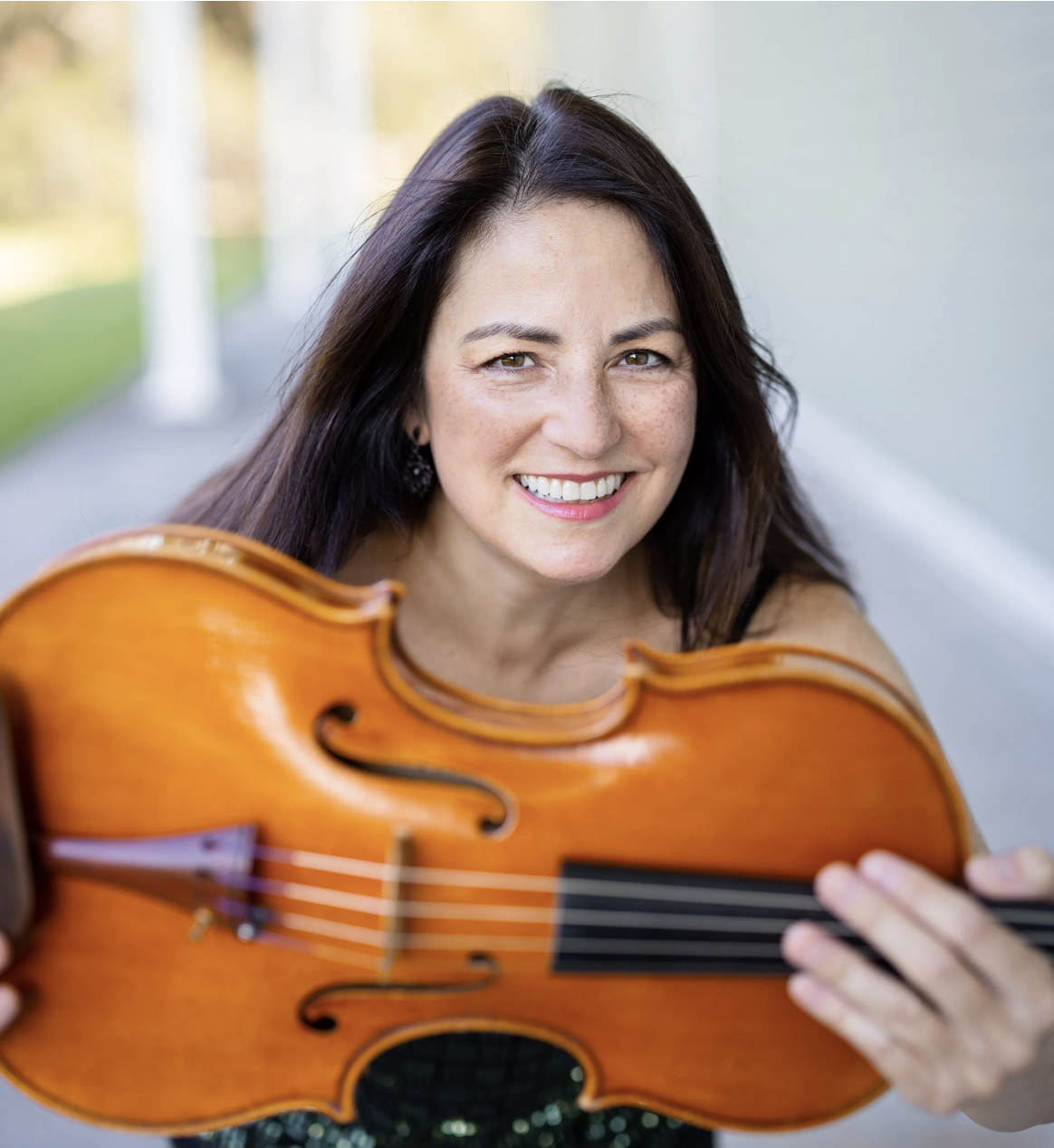
Korine Fujiwara: Viola
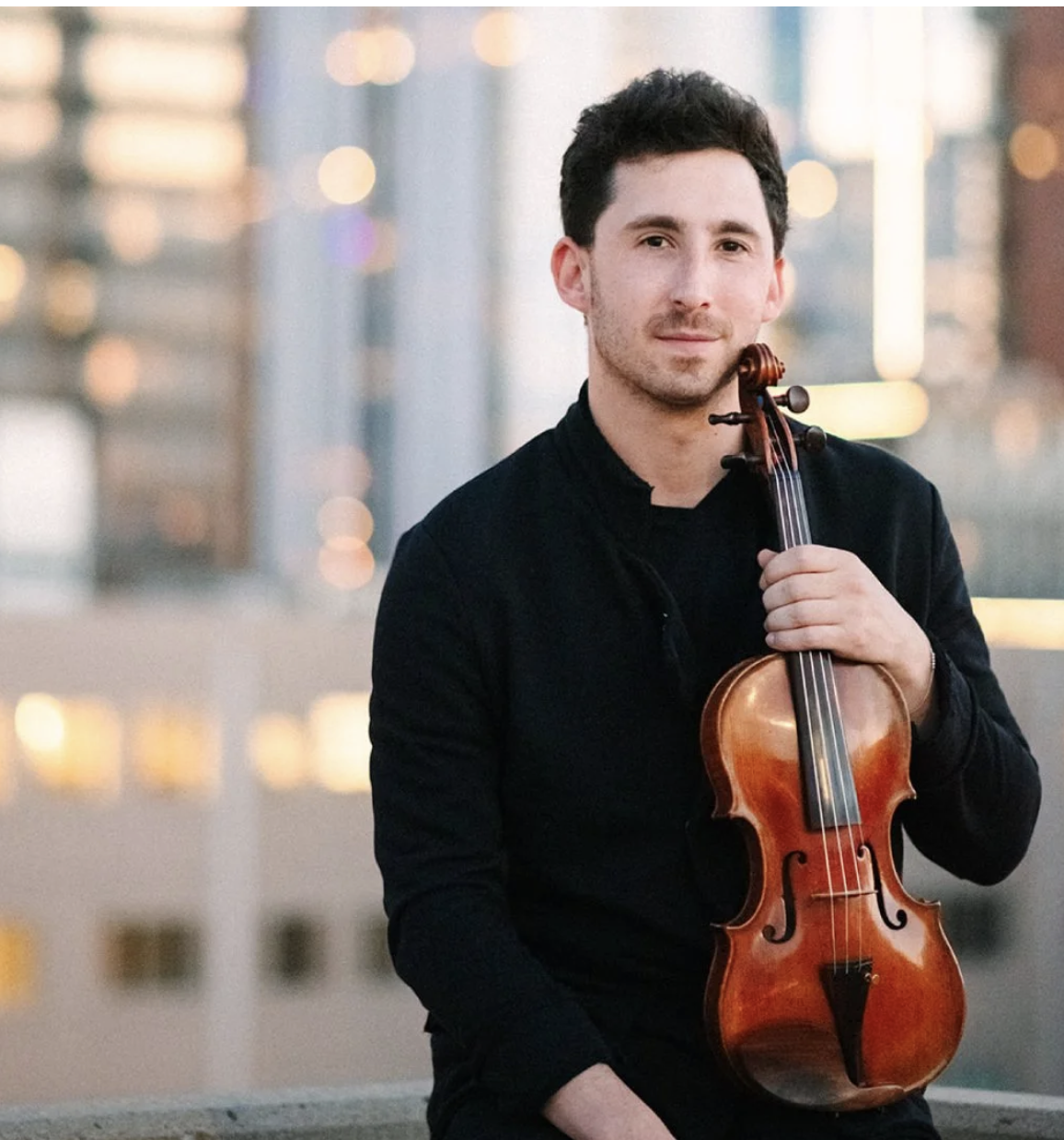
Sam Weiser: Violin
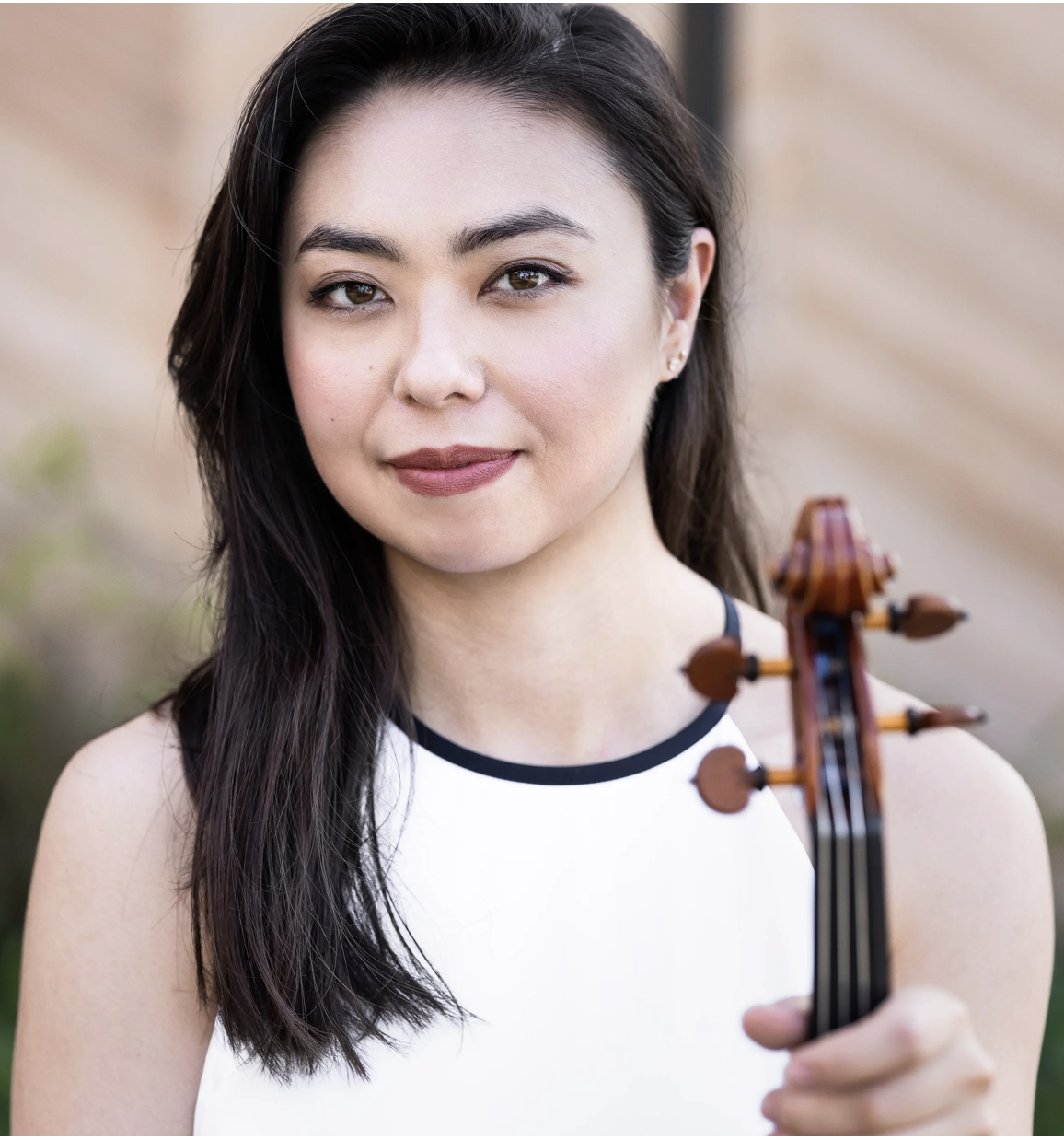
Marisa Ishikawa: Violin
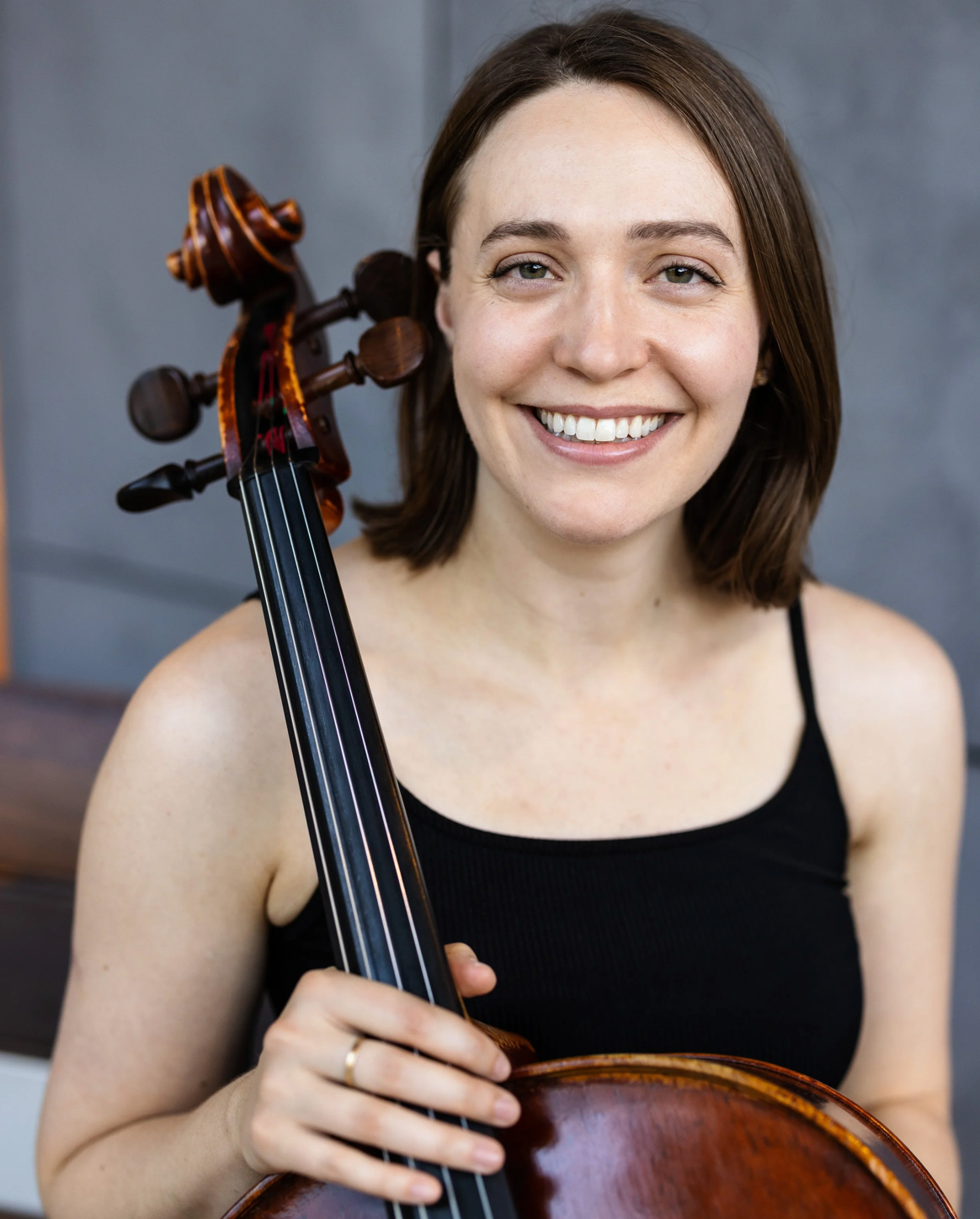
Ariana Nelson: Cello
For more Carpe Diem String Quartet information, click here.
The Artist:
Tod Seitz
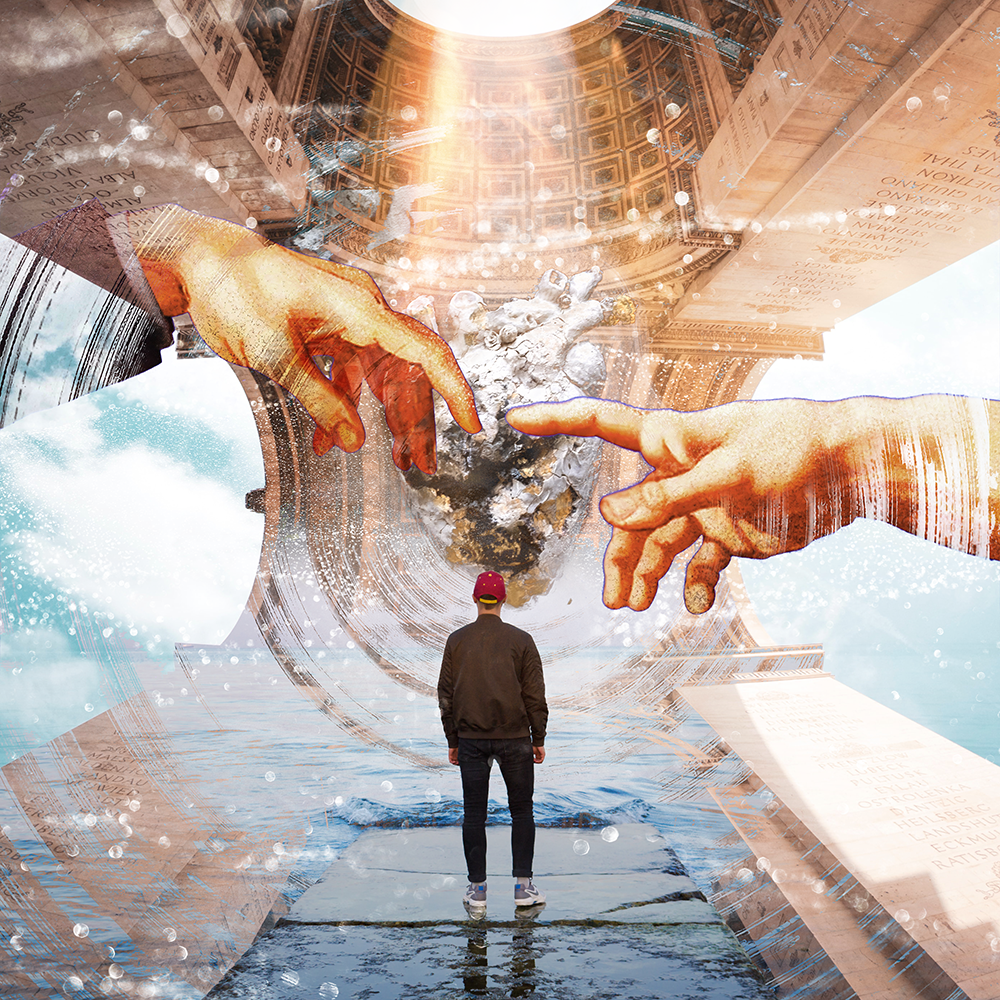
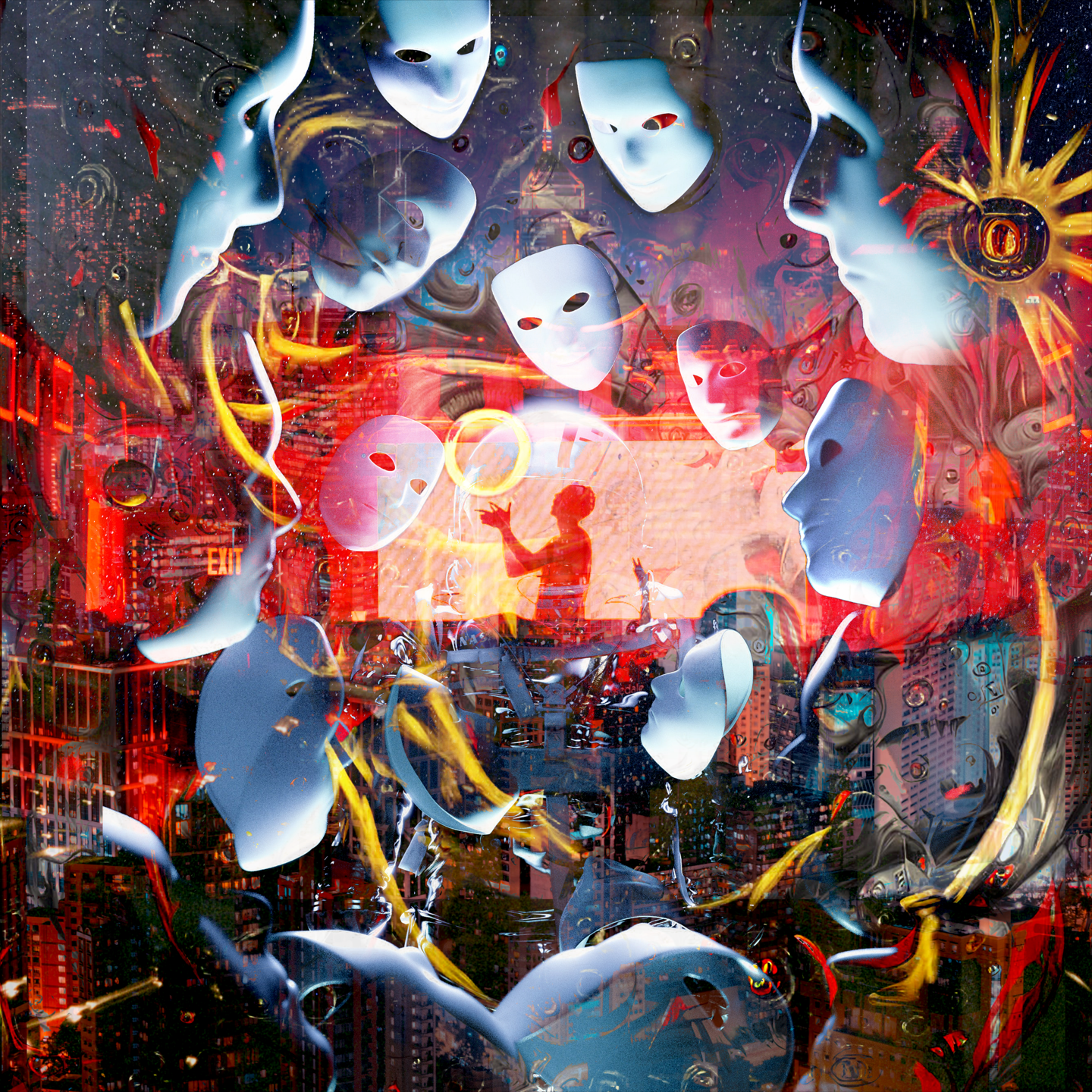
Tod Seitz (a.k.a. the Executive Star Wizard) is an artist and teacher armed with weapons-grade creative powers. Working in both the analog and digital realms, he creates visionary pieces that spark the imagination— paint, collage, Photoshop, video, and creative coding to craft bold, luminous worlds that feel equal parts design, dream, and spellwork.
The Wizard's work thrives in collaboration, especially where movement, music, and light meet. He has partnered with Columbus Dance Theatre three years in a row for their annual Dancers Making Dance performances. As well as creating explosive visuals for Experiment #2 that transformed the stage into a frisson-flowing environment. With Experiment #2 bringing sold-out shows, he’s back in the spellbook to help craft the finale experience of Experiment #3...
Tod self-published his art book Pixelated in 2020, featuring four years of psychedelic Photoshop experiments. He’s also a local Art and Gen Ed teacher. Has been a mentor with the Wild Goose Creative Incubator program, and the creator of Doodle Scool, a class designed to reconnect people with their own creative powers. The Wizard has even been featured in the hit indie video game Teenage Mutant Ninja Turtles X Justice League. His artwork has been exhibited across the world, and he’s always looking forward to the next portal.

ExecutiveStarWizard.com
todcast.shop
@todcast
The Dancers:

Erika Alloway

Josephine Duncan

Ellington Hoffman

Brennan Johnson

Hayden Johnson

Mackenzie LaFlamme
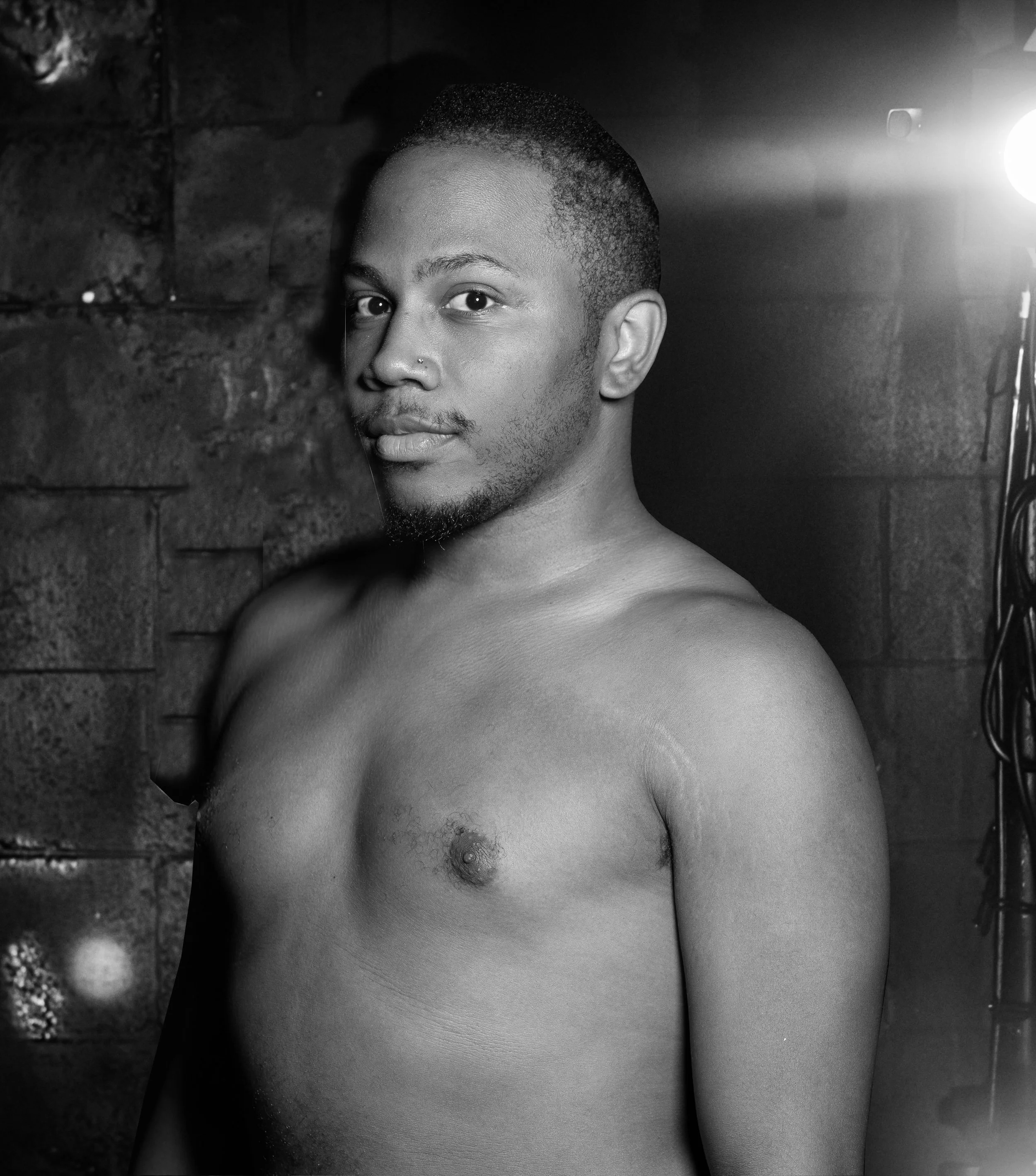
Terrence Meadows

Thomas McGuire

Jenna Swartz

Sarah Webb
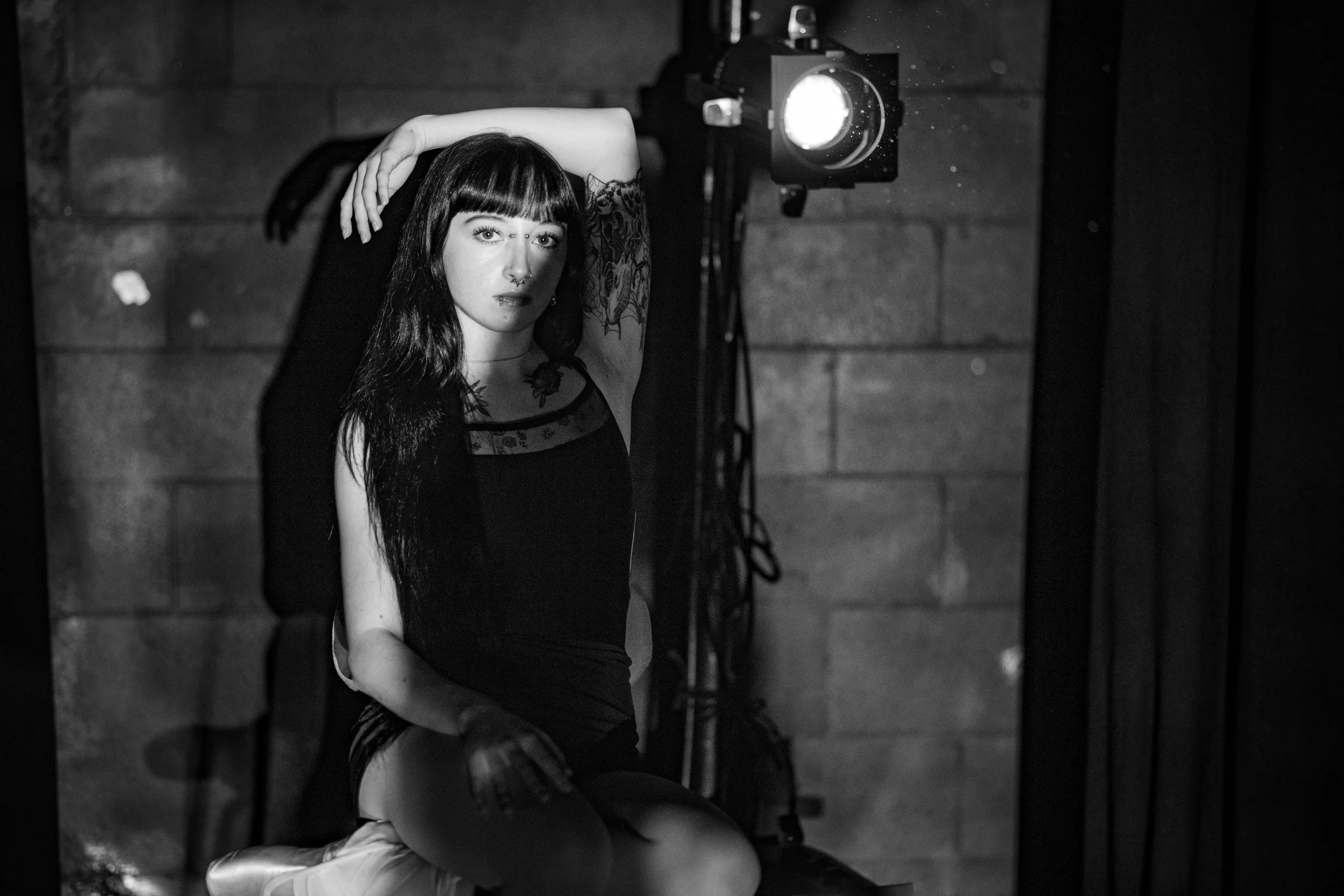
Amanda Howard-Trainee

Caitlyn Zeferino-Trainee
The Directors/Choreographers:

Seth Wilson, Artistic Director

Jaime Kotrba Wilson, Executive Director
The Notes:
Samuel Barber’s Adagio for Strings:
In the years following his graduation from the Curtis Institute, Samuel Barber spent time traveling and composing in Europe under various stipends and grants. Between 1935 and 1937, he won the Prix de Rome and two Pulitzer Travel Scholarships. Barber’s stay in Rome had a far-reaching effect on his career, for it was there in 1935 that met Arturo Toscanini. Three years later, when Toscanini became conductor of the newly formed NBC Symphony Orchestra, he premiered two new works by Barber: the First Essay and the Adagio for Strings.
Originally, the Adagio was the slow movement of Barber’s String Quartet, written in Rome in 1936. For Toscanini, Barber adapted theAdagio for full string orchestra. Its long, mellifluous lines, lyric intensity, and heartfelt sincerity had an immediate impact on audiences and critics alike. Olin Downes wrote of the premiere, “There is an arch of melody and form. The composition is most simple at the climaxes, when it develops that the simplest chord, or figure, is the one most significant.”
Barber’s Adagio has proven durable and popular in the years since it premiered. Though certain critics have grown weary of hearing the work (“an all-purpose cultural theme song”: Martin Bernheimer, Los Angeles Times), it continues to reach an ever-widening audience. It has also become a staple among American funeral music, beginning notably with President Roosevelt’s 1945 memorial service. At the funeral of Princess Grace of Monaco in 1982, the music moved family and friends to tears. The Adagio was also introduced effectively into the film scores of The Elephant Man (1980) and Platoon (1986). On TV, the music has been heard in episodes of The Simpsons, South Park, and Seinfeld.
Mark Lomax II’s Ubuntu:
Ubuntu is a traditional Afrikan concept from the South Afrikan languages of Zulu and Xhola and can be translated into "humanity toward others." As a philosophy, the idea means I am because you are, and because you are, I am. This concept most aptly reflects the radical humanity of Afrikan culture and, in the view of this composer, a path to healing the world. What would the world be like if we all practiced radical humanity?
Even before the COVID-19 pandemic, the world was out of balance. Corporations value profit over people, and, with few exceptions, a person's material worth is valued more than the substance of their humanity. This toxicity in the Human family has caused a gross imbalance, leading to such existential threats as the global climate crisis, exorbitant resource expenditures on weapons at the expense of health care and education systems, and deeper issues of divisiveness that keep us all from focusing on what matters... Us. We are both the problem AND the solution.
Ubuntu is a composition that poses the question of the importance of practicing radical Humanity. The piece begins with each quartet member playing their own rhythm and melodic theme to represent the differences Western cultures use to divide us. At mm. 46, the viola enters with a different melodic idea that sends the quartet on a journey of discovery. The quartet presents a series of colors and ideas representing how Humanity has tried and failed to unite. By the end of the piece, the ensemble is in unison, with a descending line representing the current hope and hopelessness. However, the last two chords bring hope and suggest that the future will be brighter than the present. The goal is not just lofty but elusive because the journey itself is most important.
Society's goal should always be to facilitate harmony within the human family, with the Earth and the cosmos, as we are all manifestations of the same primordial stuff. I hope that in composing and performing works such as Ubuntu, we do our small part to encourage audiences to challenge the status quo by committing to the practice of radical humanity. How, by listening, loving, learning, and leading others toward the higher ideals of justice, equity, and egalitarianism.
Asé,
— Dr. Mark Lomax, II
Korine Fujiwara’s Sunsets Like Childhood:
“Sunsets, like childhood, are viewed with wonder not just because they are beautiful but because they are fleeting.”~ Richard Paul Evans, from the novel The Gift
Taking a moment every day to capture the sunset sky painted in glorious colors is an easy way to enjoy one of life’s free gifts. In Sunsets Like Childhood I’ve tried to capture that explosion of color in music.
I am obsessed with sunrises and sunsets. I love watching the color bloom across the sky, bathing it and the surrounding geography in brilliant hues of gold, orange, pink, fuchsia, red, violet, blue, auburn. I cherish seeing the arc of the sun as it travels across the sky over the course of a day on earth. It opens with a celebration of both color and sound, as the birds awaken with the first tendrils of light and warmth and begin their chorus as the tranquility of night explodes into day. And as the sun nears the other end of its visible arc, the birds again join in their joyful end-of-day songs while the sky blazes with a gleaming, ever-changing, flame-like palette of color and light, playing with reflections and shadows across the horizon. It is a metaphor for our brief time here in this space we know as life, where we arrive into an explosion of light, noise, confusion, celebration, wide-eyed with wonder. We experience the span of our days on earth, and at some point, catch sight of the other side of the arc. There is also great beauty there, a celebration of the journey of our own personal arcs across the sky, the span of our lives. We cannot escape the other side of the arc, we cannot deny it, but we choose our approach. Some try to run away, repudiate it, fight it, grow angry with it. Others join in the chorus, celebrate the scope of the arc, the entire journey from the cacophony of the first moment of consciousness to the to the last, and live every instant of that journey in the fullest, most colorful, jubilant way.
Dedicated to those who, instead of always running from the inevitable, have chosen to run towards life. Chase the sunsets.
—Korine Fujiwara
Gabriella Smith’s Carrot Revolution:
I wrote Carrot Revolution in 2015 for my friends the Aizuri Quartet. It was commissioned by the Barnes Foundation in Philadelphia for their exhibition The Order of Things, in which they commissioned three visual artists and myself to respond to Dr. Barnes’ distinctive “ensembles,” the unique ways in which he arranged his acquired paintings along with metal objects, furniture, and pottery, juxtaposing them in ways that bring out their similarities and differences in shape, color, and texture.
While walking around the Barnes, looking for inspiration for this string quartet, I suddenly remembered a Cézanne quote I’d heard years ago (though which I later learned was misattributed to him): “The day will come when a single, freshly observed carrot will start a revolution.” And I knew immediately that my piece would be called Carrot Revolution. I envisioned the piece as a celebration of that spirit of fresh observation and of new ways of looking at old things, such as the string quartet – a 250-year-old genre – as well as some of my even older musical influences (Bach, Perotin, Gregorian chant, Georgian folk songs, and Celtic fiddle tunes).
The piece is a patchwork of my wildly contrasting influences and full of weird, unexpected juxtapositions and intersecting planes of sound, inspired by the way Barnes’ ensembles show old works in new contexts and draw connections between things we don’t think of as being related.
—Gabriella Smith